A leaking air conditioner may seem like a minor inconvenience.
When drops appear beneath the unit, it signals aircon drainage problems Cebu.
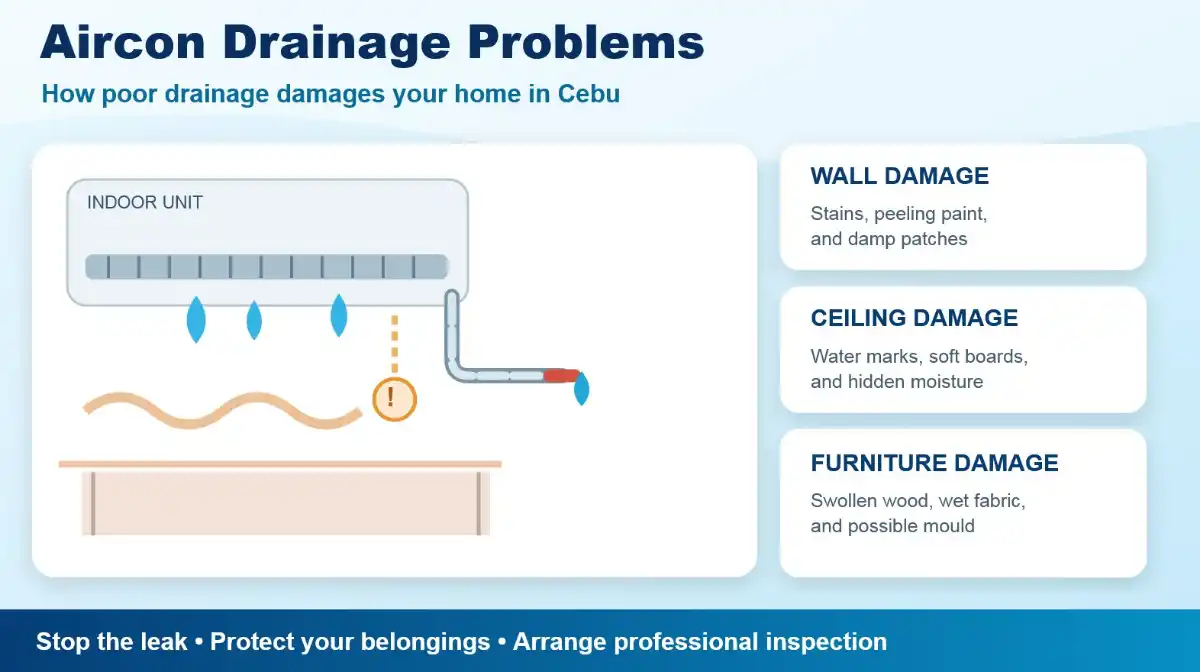
Poor drainage can cause stained walls, damaged ceilings, swollen furniture, and excess moisture.
In Cebu’s warm and humid climate, air conditioners regularly remove moisture from indoor air. This moisture must flow safely through the aircon drainage problems Cebu.
When the drain pipe becomes blocked, incorrectly positioned or damaged, water can collect inside the unit and eventually leak into the surrounding area.
Understanding the causes of aircon drainage problems can help you identify warning signs, prevent property damage and determine when professional repairs are necessary.
1. How Does an Aircon Drainage System Work?
Air conditioners do more than lower room temperature. They also remove moisture from the air.
When warm, humid indoor air passes over the cold evaporator coil, moisture condenses into water droplets.
These droplets collect in a drainage tray before flowing through a drain pipe or hose to an appropriate discharge point.
In a typical split-type aircon system, the drainage process involves checking condensate lines. This helps ensure proper draining and prevents aircon drainage problems Cebu.
- Warm indoor air passing over the evaporator coil.
- Moisture condensing on the cold coil surface.
- Water droplets collecting in the drain tray.
- Condensate flowing through the drain hose.
- Water being discharged safely outside the room or into an approved drainage connection.
Most residential systems use gravity drainage. Some installations require a condensate pump when water cannot flow to the discharge point naturally.
If any part of this process is obstructed or incorrectly installed, water may accumulate and overflow.
2. What Causes Aircon Drainage Problems?
Several issues can prevent condensation from draining correctly.
Identifying the actual cause is important because not every water leak can be repaired by simply cleaning the drain hose.
Clogged Drain Pipe
A blocked drainage pipe is one of the most common causes of water leaking from an indoor aircon unit.
Over time, dust, slime, dirt and other debris can accumulate inside the drainage system.
This buildup restricts water flow, causing condensate to collect in the drain tray.
When the tray becomes full, water may overflow through the indoor unit.
Common warning signs include:
- Water dripping from the indoor aircon
- Intermittent leaks during operation
- Water collecting beneath the unit
- Musty smells
- Slow or restricted drainage
Professional drain cleaning can often resolve this problem when a blockage is the underlying cause.
Incorrect Drain Pipe Slope
Gravity drainage requires a suitable downward path towards the discharge point.
If the drain hose is positioned incorrectly, water may remain trapped inside the line instead of flowing away.
Sagging sections, upward bends and improper routing can also restrict drainage.
This issue may occur after a new installation or when an existing drainage hose becomes displaced.
Damaged or Disconnected Drain Hose
A cracked, loose or disconnected hose can allow condensation to escape before reaching the drainage outlet.
Water may then flow behind the indoor unit, into wall cavities or across surrounding surfaces.
In some cases, the leak may remain hidden until visible damp patches develop.
Dirty Drain Tray
The drainage tray collects water from the evaporator coil.
Dirt and sludge inside the tray may obstruct its outlet, while cracks or physical damage can allow water to escape.
Regular inspection and cleaning help maintain proper drainage.
Improper Indoor Unit Installation
A split-type aircon must be installed according to the manufacturer’s mounting and drainage requirements.
An incorrectly mounted indoor unit, unsuitable drain routing or poor connection may cause recurring water leaks.
When leakage begins shortly after installation, the mounting position and drainage setup should be checked.
Frozen Evaporator Coil
Water leakage is not always caused by a clogged drain.
Restricted airflow, dirty filters, fan problems or certain refrigerant-related faults can contribute to evaporator coil freezing.
When the ice melts, the resulting water may exceed the drain system’s ability to manage it or escape through an unintended route.
If you notice ice on the aircon, have the underlying cooling problem inspected rather than repeatedly restarting the unit.
3. How Aircon Water Leaks Damage Interior Walls
Water leaking behind or below a split-type aircon can gradually damage painted and plastered wall surfaces.
The problem may begin with a small damp patch that becomes more noticeable after repeated cooling cycles.
Common Types of Wall Damage
Paint Discoloration
Persistent moisture can produce yellowish or brownish stains, especially on light-colored walls.
Peeling or Bubbling Paint
When moisture gets beneath painted surfaces, the coating may blister, peel or lose adhesion.
Damaged Plaster or Wall Finishes
Repeated wetting can weaken certain plaster, gypsum or finishing materials.
mold Growth
Damp surfaces can support mold growth when moisture remains for extended periods.
Hidden Moisture Damage
Water flowing behind the indoor unit or into a wall cavity may remain unnoticed until the affected area becomes larger.
Painting over a stain without repairing the leak does not solve the underlying problem.
The drainage fault must be corrected, and affected materials should be properly dried before repairs or repainting.
4. How Poor Aircon Drainage Damages Ceilings
Ceiling damage is particularly concerning when aircon pipes run through concealed spaces or ceiling cavities.
Some condominiums, apartments and commercial properties use hidden drainage routes to maintain a clean interior appearance.
If these pipes leak or become disconnected, water may accumulate above the ceiling.
Warning Signs of Ceiling Water Damage
- Brown or yellow stains
- Damp patches
- Peeling ceiling paint
- Sagging gypsum boards
- Soft or deteriorating ceiling materials
- Musty odors
- Water dripping from ceiling joints
Over time, saturated ceiling materials can lose their strength.
A sagging or heavily water-damaged ceiling may require professional assessment and replacement of affected sections.
Important: If water is near ceiling lights, electrical fittings or wiring, stop using the affected equipment and arrange a qualified electrical safety assessment. Do not touch wet electrical components.
5. How Aircon Leaks Damage Furniture and Appliances
Furniture placed directly below or near an air conditioner is vulnerable to repeated water exposure.
Even a slow leak can damage materials that absorb moisture.
Wooden Furniture
Wooden shelves, desks, wardrobes and cabinets may swell, warp or develop damaged finishes when repeatedly exposed to water.
Laminated Furniture
Moisture can penetrate the edges of laminated boards, causing swelling or separation of the surface layer.
Upholstered Furniture
Sofas, mattresses and padded chairs may absorb water and develop unpleasant smells or mold contamination.
Electronics and Appliances
Water dripping onto televisions, computers, power outlets or other electrical equipment can create serious safety hazards.
If water reaches electrical devices, avoid touching or operating them until they have been safely disconnected and assessed.
Curtains and Carpets
Fabric materials can absorb moisture and develop stains or persistent odors if they remain damp.
Prompt action can help limit damage to surrounding belongings.
6. Why Aircon Water Leaks Should Not Be Ignored
A few drops of water may appear harmless, but recurring leaks can create larger problems.
Consider these possible consequences:
| Drainage Problem | Potential Damage |
|---|---|
| Blocked drain pipe | Water overflowing from the indoor unit |
| Leaking drain hose | Damp walls and damaged finishes |
| Concealed pipe leakage | Hidden ceiling or wall damage |
| Poor drainage slope | Recurring indoor water leaks |
| Dirty drain tray | Overflow and unpleasant smells |
| Persistent moisture | Mould growth and material deterioration |
| Water near electrical equipment | Electrical safety hazards |
| Water reaching furniture | Swelling, staining and damage |
The longer affected materials remain wet, the greater the risk of deterioration.
Prompt repairs can prevent a small drainage fault from becoming a more expensive property maintenance problem.
7. Can Aircon Drainage Problems Cause mold?
Yes. Persistent moisture from an aircon leak can create conditions that support mold growth.
mold may develop on painted walls, ceiling boards, wooden surfaces, furniture or other damp materials.
In humid environments such as Cebu, drying affected areas promptly is especially important.
The US Environmental Protection Agency recommends addressing moisture problems and drying wet materials within approximately 24–48 hours where possible to help prevent mold growth.
Signs of Possible Moisture-Related mold
- Musty smells near the aircon
- Dark or discolored patches on damp surfaces
- Recurring moisture stains
- Damp wallpaper or wall coverings
- Visible growth around wet materials
Visible mold should not simply be painted over.
The water source must be fixed, affected surfaces cleaned appropriately, and damaged porous materials assessed for replacement when necessary.
Extensive contamination or hidden mold may require professional remediation.
8. What Should You Do When Your Aircon Starts Leaking?
If water begins dripping from your indoor unit, act promptly to prevent further damage.
Step 1: Turn Off the Aircon
Stop operating the unit to reduce additional condensate production.
If water is near electrical components, do not touch wet switches, outlets or equipment. Have the power safely isolated by a qualified person if necessary.
Step 2: Protect Nearby Belongings
Move furniture, electronics, documents and other valuable items away from the affected area, provided it is safe to do so.
Use towels or a suitable container to collect dripping water.
Step 3: Check for Visible Warning Signs
Without opening electrical covers or dismantling the unit, look for:
- Water dripping from the indoor casing
- A visibly displaced drain hose
- Damp patches on the wall
- Water collecting beneath the aircon
- Ice or unusual condensation
These observations can help a technician identify the likely problem.
Step 4: Record the Problem
Take photographs of the leak and any affected walls, ceilings or furniture.
This can be useful when explaining the issue to an aircon technician, landlord, property manager or insurer.
Step 5: Arrange Professional Inspection
If the cause is uncertain, or leakage continues, have the drainage system inspected.
Avoid forcing objects into the drain hose, dismantling the aircon or attempting electrical repairs without appropriate training.
9. How Do Technicians Fix Aircon Drainage Problems?
The correct repair depends on what is causing the leak.
A professional aircon technician may inspect the indoor unit, drain tray, hose routing and discharge point before recommending the necessary work.
Common Aircon Drainage Repairs
| Problem | Possible Professional Solution |
|---|---|
| Blocked drain pipe | Clear the obstruction and test water flow |
| Dirty drain tray | Clean the tray and drain outlet |
| Incorrect pipe slope | Correct the drainage routing |
| Damaged drain hose | Repair or replace the affected section |
| Loose drainage connection | Reconnect and secure the hose |
| Faulty condensate pump | Inspect, repair or replace the pump |
| Frozen evaporator coil | Diagnose the underlying cooling or airflow problem |
| Improper unit positioning | Correct mounting or drainage arrangements |
After repairs, the technician should test the system to confirm that condensate drains correctly.
10. How Much Does Aircon Drainage Repair Cost in Cebu?
The cost of repairing an aircon drainage issue depends on the cause, accessibility and work required.
A simple drain blockage may be easier to resolve than a concealed pipe leak inside a ceiling or condominium wall.
Factors That Affect Repair Costs
- Type of aircon unit
- Location of the drainage blockage
- Accessibility of the drain hose
- Need for replacement pipes or fittings
- Damage to the drain tray
- Condensate pump requirements
- Concealed pipe routing
- Additional cleaning or repair work
- Inspection and labor charges
The cost of repairing water-damaged walls, ceilings or furniture may be separate from the aircon servicing fee.
Before authorizing repairs, request a quotation that identifies the cause of the problem, proposed work and any replacement materials.
11. How to Prevent Aircon Drainage Problems
Preventive maintenance can reduce the likelihood of drainage blockages and water leaks.
Clean Aircon Filters Regularly
Dirty filters restrict airflow and can contribute to cooling problems.
Follow the manufacturer’s instructions for cleaning frequency and filter care.
Schedule Professional Aircon Cleaning
Cleaning the indoor unit can help remove accumulated dirt from accessible components, including the drain tray and drainage system when included in the service.
Inspect Drainage During Maintenance
Ask the technician to check the drain pipe, outlet, connections and water flow.
Maintain Proper Pipe Routing
Drainage hoses should be securely positioned and installed according to the equipment requirements.
Look for Early Moisture Signs
Check the surrounding wall and floor for unexplained damp patches, dripping water or recurring stains.
Keep the Drainage Outlet Clear
Where safely accessible, make sure the discharge point is not obstructed by debris or other objects.
Address Leaks Immediately
Do not continue operating an aircon that repeatedly leaks indoors.
A small repair may help prevent more serious property damage.
12. Aircon Drainage Considerations for Cebu Condominiums
Aircon drainage requires special attention in high-rise residential buildings.
Many condominiums have designated discharge connections, concealed pipe routes and property management rules governing aircon installation.
Water escaping from an incorrectly installed drain may affect neighboring units or shared building areas.
Before installing or modifying an aircon drainage system, confirm:
- Approved drainage connections
- Permitted pipe routes
- Required pipe slope
- Condensate pump requirements, if any
- Access for maintenance
- Property management approval
- Restrictions on external water discharge
Residents should report suspected leaks affecting common areas or neighboring units to their building administration promptly.
13. Aircon Drainage Maintenance for Homes and Businesses
Poor drainage does not affect residential properties alone.
Offices, shops, restaurants, clinics and other commercial establishments also rely on properly functioning air-conditioning drainage systems.
A leak above equipment, stock or customer areas can disrupt business operations and create additional maintenance costs.
For commercial properties, a planned maintenance program may include:
- Drainage inspections
- Drain pan cleaning
- Condensate pipe checks
- Inspection of concealed lines
- Pump testing where fitted
- Airflow and cooling performance checks
Maintenance frequency should reflect actual usage, operating conditions and manufacturer recommendations.
14. When Should You Call an Aircon Technician?
Not every moisture problem indicates a serious aircon fault, but some warning signs require prompt attention.
Arrange a professional inspection when:
- Water repeatedly drips from the indoor unit.
- Cleaning the filter does not resolve the problem.
- Water stains appear behind the aircon.
- Ceiling damage develops near concealed pipe routes.
- The drain hose is damaged or disconnected.
- The aircon produces unusual smells alongside leakage.
- Ice forms on the evaporator coil or refrigerant piping.
- Water leaks soon after installation.
- The unit stops cooling normally.
- Drainage problems keep returning after cleaning.
Professional diagnosis helps distinguish between an ordinary blockage, an installation defect and a separate cooling-system fault.
15. Aircon Drainage Problems in Cebu: Professional Inspection and Repair
Aircon water leakage can affect more than comfort. It may damage interior finishes, furniture and electrical equipment when left unresolved.
At Cebu Aircon Services, we understand the importance of identifying drainage problems before they lead to more extensive property damage.
If you are experiencing an aircon water leak in Cebu City, Mandaue, Lapu-Lapu, Talisay or nearby areas, a professional assessment can help determine whether the issue involves a blocked pipe, damaged hose, incorrect drainage route or another aircon problem.
Proper diagnosis and timely servicing are important for restoring reliable operation.
Frequently Asked Questions
Why is my split-type aircon leaking water inside the room?
Common causes include a clogged drain hose, blocked drain tray, incorrect drainage slope, loose pipe connections or an evaporator coil freezing and thawing. A technician can identify the actual cause.
Can a clogged aircon drain damage my wall?
Yes. Overflowing condensate can soak wall surfaces, causing staining, peeling paint, deterioration and potential mold growth.
Can aircon drainage problems damage the ceiling?
Yes. Leaks from concealed drain pipes may wet gypsum boards, ceiling finishes and other materials. Repeated moisture exposure can cause staining, sagging and deterioration.
Is it safe to use an aircon that is leaking water?
It is best to stop using the unit until the cause is identified. Water near electrical fittings or appliances can create a safety hazard.
Can I unclog an aircon drain pipe myself?
Basic visible checks may be possible, but internal drain cleaning and dismantling should be handled by a trained technician if you are unfamiliar with the system. Improper methods can damage components or create further leaks.
Does aircon cleaning include drain pipe cleaning?
Some professional cleaning services include drain tray and pipe inspection or flushing, but service packages vary. Confirm what is included before booking.
Why does my aircon leak only after several hours?
Water may gradually accumulate when drainage is partially restricted. Leakage can also occur when condensation increases or an iced coil starts thawing. Inspection is needed to determine the cause.
How do I know whether the water leak comes from the aircon or plumbing?
Check when the leak occurs, where moisture first appears and whether it corresponds with aircon operation. Hidden plumbing leaks and roof water entry can produce similar symptoms, so professional investigation may be necessary.
How often should the aircon drainage system be checked?
The drainage system should be inspected as part of appropriate routine servicing. Frequency depends on aircon usage, dust levels, humidity and the manufacturer’s recommendations.
Does poor drainage affect aircon cooling?
A blocked drain does not always directly reduce cooling performance. However, drainage issues may occur alongside dirty coils, airflow restrictions or other faults that affect cooling.
Final Thoughts
Aircon drainage problems should never be ignored, even when the leak appears small.
Blocked hoses, damaged drain trays and incorrect pipe routing can allow water to reach walls, ceilings, furniture and electrical equipment.
Recognizing the warning signs, switching off a leaking unit and arranging proper inspection can help limit damage.
Regular aircon maintenance also provides an opportunity to identify developing drainage problems before they become more serious.
Is Your Aircon Leaking Water in Cebu?
Contact Cebu Aircon Services to discuss your aircon drainage concerns and arrange a professional inspection. Addressing the cause early can help protect your property and restore dependable cooling.