Preparing a rental property for a new tenant involves more than cleaning the floors, repainting walls and checking furniture. The air-conditioning system also needs attention, especially in Cebu, where warm temperatures and humidity make reliable cooling an important part of everyday comfort.
An aircon may appear to be working normally during a quick inspection but still have dirty filters, restricted airflow, drainage problems or developing electrical faults.
When these issues go unnoticed, a new tenant may experience weak cooling, unpleasant smells or water leakage shortly after moving in.
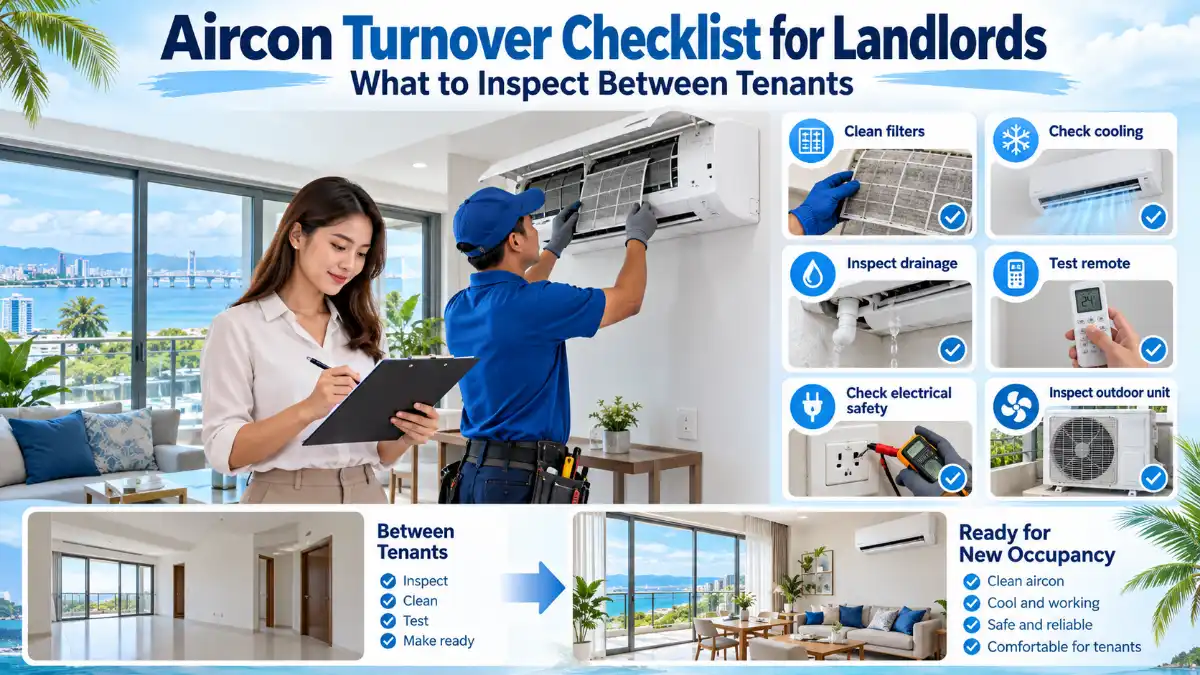
For landlords managing condominiums, apartments, boarding houses or multiple rental units, a structured aircon turnover checklist helps identify maintenance needs before the next occupant arrives.
This guide explains what to inspect, what should be handled by a professional technician and how to document the aircon’s condition between tenancies.
1. Why Aircon Inspections Matter Between Tenants
The period between tenants is a practical opportunity to inspect and service an air conditioner without interrupting someone’s daily routine.
During an occupied tenancy, arranging maintenance can require advance notice, coordinating appointments and gaining access to bedrooms or living spaces.
Once the property becomes vacant, landlords can assess the equipment more thoroughly.
Benefits of an Aircon Turnover Inspection
A proper inspection can help:
- Identify existing cooling problems
- Check for water leaks and drainage issues
- Remove accumulated dust and dirt
- Detect unusual noises or vibrations
- Verify remote control operation
- Assess visible electrical safety concerns
- Document the condition of installed equipment
- Plan repairs before the next move-in
- Reduce avoidable maintenance complaints
- Support reliable cooling for incoming tenants
A turnover inspection cannot guarantee that an aircon will never break down, but it can reduce the chance of handing over a unit with an existing, detectable problem.
2. Confirm the Aircon’s Basic Operating Condition
Begin with a simple visual and functional assessment.
Before operating the unit, check for obvious damage, loose components, electrical warning signs or water around the equipment.
If anything appears unsafe, do not switch on the aircon. Arrange a professional inspection first.
Basic Operating Checklist
If it is safe to operate:
- Turn on the aircon using its remote control.
- Select cooling mode.
- Set an appropriate temperature.
- Check whether the indoor fan operates normally.
- Confirm that the unit produces cool air.
- Listen for unusual sounds.
- Observe whether water leaks develop.
- Check that the remote responds to commands.
- Confirm the unit shuts down correctly.
Cooling performance should be assessed under realistic conditions.
An air conditioner may need time to reduce room temperature, particularly if the property has been closed for several days.
If the unit struggles to cool despite reasonable operating conditions, professional diagnosis may be necessary.
3. Inspect and Clean the Air Filters
Air filters collect dust and airborne particles as air circulates through the indoor unit.
Over time, dirty filters can restrict airflow and reduce cooling performance.
In rental properties, filter condition can vary significantly depending on the previous occupant’s usage, cleaning habits and indoor environment.
What to Check
- Visible dust accumulation
- Damaged filter mesh
- Missing filter sections
- Incorrectly fitted filters
- Unpleasant smells
- Heavy dirt around the intake area
Washable filters should be cleaned according to the manufacturer’s instructions and dried properly before reinstallation.
Damaged filters may require replacement.
For air conditioners that receive frequent use, filter inspection should be part of routine servicing rather than something performed only during tenant turnover.
4. Check the Evaporator Coil and Blower Condition
The evaporator coil and blower are important components of the indoor air-conditioning system.
The evaporator coil absorbs heat from the room, while the blower circulates conditioned air.
Dust accumulation on these components can affect airflow and cooling efficiency.
Possible Warning Signs
- Weak airflow despite clean filters
- Visible dirt around the blower
- Musty smells during operation
- Unusual fan noise
- Uneven air distribution
- Reduced cooling performance
A technician may recommend standard cleaning or a more thorough service depending on the amount of contamination present.
Deep cleaning should be based on the unit’s actual condition rather than automatically performed at every tenant turnover.
Related reading: What Is the Difference Between Standard Aircon Cleaning, Deep Cleaning, and Chemical Cleaning?
5. Inspect the Drainage System for Water Leaks
Aircon drainage is one of the most important areas to check before a new tenant moves in.
During normal cooling, moisture condenses on the evaporator coil and flows through a drainage tray and pipe.
If the system becomes blocked or damaged, water can leak indoors.
Aircon Drainage Inspection Checklist
Check for:
- Water dripping from the indoor unit
- Damp patches on nearby walls
- Stains beneath the aircon
- Blocked or damaged drain hoses
- Loose drainage connections
- Musty smells
- Water collecting around the unit
- Signs of previous leakage
A technician should inspect the drainage route and confirm that condensate flows correctly.
This is especially important for condominiums where concealed drainage pipes may pass through ceiling spaces or connect to a shared building system.
Why Drainage Problems Should Be Fixed Before Move-In
An unresolved leak can damage paint, ceilings, wardrobes, beds, curtains and other furnishings.
If water reaches electrical fittings, it may also create a safety hazard.
Landlords should address drainage faults before handing over the property.
Related reading: Aircon Drainage Problems: How Poor Drainage Damages Walls, Ceilings, and Furniture.
6. Check the Outdoor Condenser Unit
For split-type air conditioners, the outdoor condenser also needs inspection.
Outdoor units are exposed to environmental conditions that can affect their operation over time.
In Cebu, coastal humidity, rainfall, dust and salt-laden air may contribute to dirt accumulation or corrosion.
Outdoor Condenser Inspection Points
- Visible dirt or debris around the unit
- Restricted ventilation
- Corrosion or physical damage
- Unusual fan noise
- Loose or deteriorated mounting brackets
- Damaged pipe insulation
- Signs of oil residue around refrigerant connections
- Vegetation or objects obstructing airflow
- Visible cable damage
Do not open electrical covers or attempt to clean inaccessible outdoor units yourself.
Condominium installations may require building approval, safe access arrangements or specialised equipment.
A qualified technician should handle technical inspections and servicing.
7. Inspect Electrical Connections and Safety
Electrical safety must be considered before releasing a rental property to a new occupant.
Air conditioners rely on electrical wiring, protective devices, grounding and internal components.
Damaged electrical connections can create risks that are not always obvious during normal operation.
Electrical Warning Signs
Look for:
- Burn marks near outlets
- Damaged power cords
- Exposed wiring
- Loose electrical fittings
- Repeated circuit breaker trips
- Burning smells
- Unusual buzzing or crackling
- Water near electrical components
If any of these signs are present, stop using the equipment and arrange qualified electrical assistance.
Landlords should not attempt to repair fixed wiring or modify circuit breakers without the necessary qualifications.
Professional inspection may be required before the unit can be safely operated.
Related reading: Aircon Electrical Safety Checklist for Homes, Offices, and Rental Properties.
8. Test the Remote Control and Aircon Settings
A properly functioning aircon should respond consistently to its control system.
Remote control problems may seem minor, but they can affect a tenant’s ability to use the equipment correctly.
Remote Control Checklist
- Power button works
- Temperature settings respond
- Fan speed can be adjusted
- Cooling mode operates
- Swing function works where provided
- Timer settings respond where supported
- Display is readable
- Batteries are in good condition
- Remote casing is undamaged
Replace weak or leaking batteries before handing over the unit.
Make sure the remote control remains with the property and is included in the turnover inventory.
If the aircon uses a wired controller or smart control system, confirm that the relevant functions operate correctly.
9. Check for Unusual Noise and Vibration
Air conditioners naturally produce some noise during operation.
However, unusual rattling, grinding, clicking or excessive vibration may indicate a developing problem.
Possible Causes
- Loose mounting components
- Dirty or unbalanced blower
- Fan motor problems
- Damaged fan blades
- Loose panels
- Outdoor condenser vibration
- Worn mechanical components
An unusual noise should be investigated rather than dismissed as normal.
The source may be minor, but some faults can become more serious if operation continues.
10. Inspect the Surrounding Walls, Ceiling and Furniture
An aircon turnover inspection should include the areas surrounding the equipment.
Water leakage and condensation problems can leave visible signs even when the unit is not operating.
Property Damage Checklist
| Area | What to Inspect |
|---|---|
| Wall behind aircon | Dampness, stains and peeling paint |
| Ceiling | Water marks, sagging or discolouration |
| Floor | Water stains or moisture damage |
| Wooden furniture | Swelling, warping or damaged finishes |
| Curtains | Dampness and unpleasant smells |
| Electrical outlets | Signs of moisture or overheating |
| Pipe covers | Loose sections or condensation |
| Outdoor mounting area | Corrosion and visible deterioration |
Record any damage with photographs.
If a moisture problem is present, identify and repair the source before repainting or replacing affected materials.
11. Decide Whether the Aircon Needs Cleaning, Repair or Replacement
Not every aircon requires the same work between tenants.
Some units may only need filter cleaning and a routine inspection.
Others may require professional deep cleaning, drainage repair or replacement of worn components.
Recommended Action Based on Condition
| Aircon Condition | Suggested Action |
|---|---|
| Cooling normally, light dust | Routine cleaning and inspection |
| Heavy internal dirt | Professional deep cleaning assessment |
| Weak airflow | Inspect filters, blower and cooling system |
| Water leaking indoors | Drainage inspection and repair |
| Unusual mechanical noise | Professional diagnosis |
| Burning smell or electrical fault | Stop use and seek qualified assistance |
| Frequent breakdowns | Assess repair versus replacement |
| Serious corrosion or damage | Professional evaluation |
The appropriate service should be based on inspection findings rather than automatically choosing the most expensive cleaning package.
12. Prepare a Tenant Turnover Aircon Inspection Record
Documentation is useful for landlords who manage multiple properties or want to maintain clear equipment records.
A turnover inspection report should identify the aircon, its condition and any work completed.
Suggested Aircon Turnover Record
| Field | Example |
|---|---|
| Property | Cebu City condominium |
| Unit Number | 305 |
| Aircon Type | Split-type inverter |
| Capacity | 1.0 HP |
| Inspection Date | 18 October 2026 |
| Cooling Performance | Satisfactory |
| Filter Condition | Cleaned |
| Drainage | No leak observed |
| Remote Control | Working |
| Electrical Concerns | None visibly observed |
| Professional Service | Routine cleaning |
| Next Inspection | According to maintenance plan |
| Remarks | Ready for tenant handover |
The information above is illustrative, not an actual inspection record.
Attach dated photographs and technician reports when available.
A visual inspection should not be described as a complete electrical safety certification.
13. Document Aircon Condition Before Returning a Security Deposit
Some tenancy disputes arise when landlords and tenants disagree about the condition of installed appliances.
Aircon documentation can help distinguish ordinary wear and tear from damage requiring investigation.
Useful records include:
- Initial move-in equipment condition
- Previous servicing dates
- Tenant maintenance reports
- Photographs before and after tenancy
- Professional technician findings
- Repair invoices
- Equipment warranty information
Avoid automatically charging tenants for cleaning, ordinary deterioration or repairs without considering the lease agreement and the circumstances.
Under the Philippine Civil Code, landlords have certain duties concerning the condition and necessary repairs of leased property, while tenants also have obligations concerning proper use and the return of leased premises, subject to applicable provisions and agreements.
A well-documented turnover process helps both parties understand the property’s condition.
14. Establish a Maintenance Schedule for the Next Tenant
Once the aircon has been inspected and any necessary work completed, update its maintenance record.
Include:
- Date of completed cleaning
- Identified faults and repairs
- Technician’s recommendations
- Filter maintenance instructions
- Planned professional servicing
- Warranty status
- Emergency reporting procedure
For properties with several air conditioners, use a central spreadsheet or maintenance management system.
Scheduling future maintenance based on actual usage, manufacturer recommendations and operating conditions is more effective than relying on a fixed interval for every unit.
Related reading: How Landlords Can Create an Aircon Maintenance Schedule for Multiple Rental Units.
15. Provide Aircon Usage Instructions to New Tenants
Not every tenant is familiar with the aircon model installed in the property.
A short handover explanation can help prevent unnecessary complaints and improper operation.
Information to Explain
- How to turn the aircon on and off
- How to select cooling mode
- How to adjust the thermostat
- How to operate fan and swing settings
- How to use the timer
- Whether tenants may clean washable filters
- How to report unusual noise or leakage
- Whom to contact for maintenance
- What actions require landlord approval
The information can be included in a printed tenant welcome guide or digital property manual.
16. Aircon Turnover Checklist for Cebu Condominiums
Condominium landlords may need to coordinate with building management before arranging professional aircon servicing.
Some buildings have specific requirements for technician access, service schedules and outdoor condenser maintenance.
Condo-Specific Checks
- Confirm access to designated outdoor unit locations.
- Check building rules for servicing and repairs.
- Arrange contractor registration if required.
- Verify approved condensate drainage connections.
- Report leaks affecting common areas.
- Confirm whether maintenance permits are necessary.
- Review restrictions on exterior modifications.
These requirements vary between buildings.
Contact the property management office before scheduling work that may affect shared building systems.
17. Printable Aircon Turnover Checklist for Landlords
Use this checklist whenever a tenant moves out and before the next occupant receives the keys.
| Inspection Task | Check |
|---|---|
| Record aircon model and serial number | ☐ |
| Inspect unit for visible damage | ☐ |
| Confirm cooling operation | ☐ |
| Check airflow | ☐ |
| Inspect and clean filters | ☐ |
| Assess indoor coil and blower condition | ☐ |
| Check drainage and water leakage | ☐ |
| Inspect outdoor condenser where accessible | ☐ |
| Check for unusual noise or vibration | ☐ |
| Inspect visible electrical safety warning signs | ☐ |
| Test remote control | ☐ |
| Inspect nearby walls and ceiling | ☐ |
| Photograph equipment condition | ☐ |
| Review previous maintenance records | ☐ |
| Arrange required professional cleaning | ☐ |
| Complete necessary repairs | ☐ |
| Confirm equipment is ready for occupancy | ☐ |
| Update next maintenance appointment | ☐ |
| Provide operating instructions to new tenant | ☐ |
A completed checklist is a useful record, but it does not replace necessary technical inspections by qualified professionals.
18. Common Aircon Turnover Mistakes Landlords Should Avoid
Assuming an Aircon Is Fine Because It Turns On
An aircon may operate while still having restricted airflow, poor drainage or another developing fault.
Skipping Cleaning Between Tenants
An inspection should determine whether cleaning is necessary before the new occupant arrives.
Ignoring Small Water Stains
Minor stains can indicate hidden or recurring drainage problems.
Failing to Test the Remote Control
Missing or malfunctioning remotes can create inconvenience immediately after move-in.
Forgetting the Outdoor Condenser
The outdoor unit is an essential part of a split-type system and should be included in appropriate professional servicing.
Overlooking Electrical Warning Signs
Repeated breaker trips, burning smells and damaged wiring should never be treated as routine maintenance issues.
Keeping No Maintenance Records
Without documentation, landlords may struggle to establish previous equipment condition or explain repair decisions.
19. Professional Aircon Turnover Inspection and Cleaning in Cebu
Preparing a rental property for new occupants requires careful attention to the installed air-conditioning system.
For landlords managing condominiums, apartments, boarding houses and residential rentals in Cebu, a proper aircon turnover process can help identify problems before move-in.
At Cebu Aircon Services, we understand the importance of reliable air conditioning for rental properties.
Whether you need advice about routine cleaning, drainage problems or professional inspection before a new tenancy, the correct maintenance approach should reflect the aircon’s condition and the property’s requirements.
Property owners in Cebu City, Mandaue, Lapu-Lapu, Talisay and nearby areas can arrange an appropriate aircon assessment before handing over their rental units.
Frequently Asked Questions
Should landlords clean an aircon before a new tenant moves in?
Landlords should inspect the unit and arrange cleaning where necessary. Dirty filters, contaminated internal components or unpleasant smells should be addressed before occupancy.
What should be checked during an aircon turnover inspection?
Important checks include cooling performance, filter condition, airflow, drainage, remote control operation, visible damage, unusual noises and electrical warning signs.
Who is responsible for aircon cleaning between tenants?
Responsibility depends on equipment ownership, the lease agreement and applicable law. Landlords should clarify who pays for routine cleaning and necessary repairs.
Can a landlord charge a tenant for aircon damage?
Potential responsibility depends on the cause of damage, the lease and applicable legal requirements. Ordinary wear and tear should be distinguished from damage caused by misuse or negligence.
How long does an aircon turnover inspection take?
Inspection time depends on the unit type, condition, accessibility and whether cleaning or diagnostic work is required. More extensive repairs can take additional time.
Is chemical cleaning required between every tenancy?
No. Chemical cleaning should only be considered when appropriate for the unit’s condition and the manufacturer’s cleaning requirements.
Should the outdoor condenser be inspected?
Yes. The condenser should be assessed for visible damage, airflow restrictions, corrosion and other issues, with technical inspections carried out by qualified personnel.
What if the aircon works but does not cool properly?
Possible causes include dirty filters, restricted airflow, refrigerant-related problems or mechanical faults. A technician should diagnose the issue before repairs are authorised.
Should landlords give new tenants aircon operating instructions?
Yes. Basic instructions on cooling settings, filter care, fault reporting and maintenance responsibilities can help tenants use the equipment appropriately.
How often should rental aircons be professionally serviced?
The schedule should reflect manufacturer guidance, usage, dust levels, humidity and the equipment’s condition. There is no universal servicing interval suitable for every rental property.
Final Thoughts
An aircon turnover inspection is an important part of preparing a rental property for new tenants.
Checking cooling performance, filters, drainage, outdoor components and electrical warning signs can help identify problems before the next move-in.
Landlords should also document the condition of each unit, complete necessary servicing and provide clear operating instructions to incoming occupants.
A consistent turnover process can make property management more organised while supporting reliable aircon performance.
Preparing a Rental Property for New Tenants in Cebu?
Contact Cebu Aircon Services to discuss your aircon inspection, cleaning or repair requirements before tenant handover.
Addressing maintenance concerns between tenancies can help reduce avoidable disruption and protect your rental property’s equipment.