Leaving a house, condominium or rental property vacant for several months requires more preparation than locking the doors and switching off the lights. Your air conditioner also needs attention before an extended period of inactivity.
In Cebu’s warm and humid climate, unused air-conditioning equipment may be affected by moisture, dust, insects and outdoor weather exposure. Without proper preparation, these conditions can lead to unpleasant odours, blocked drainage, corrosion or operational problems when the property is occupied again.
Whether you are travelling overseas, waiting for new tenants or temporarily closing a property, preparing your aircon before leaving can help protect its condition and reduce avoidable repair expenses.
This guide explains how to clean, shut down and protect your air conditioner during long-term vacancy, along with the checks to perform before restarting it.
1. Inspect the Aircon Before Leaving
Before shutting down your air conditioner, check whether it is operating normally.
If the unit is safe to operate, run it in cooling mode and observe its performance.
Pay attention to:
- Weak or inconsistent cooling
- Unusual mechanical noise
- Water dripping from the indoor unit
- Musty or burning smells
- Excessive vibration
- Visible damage to accessible components
A malfunctioning air conditioner should be inspected before the property is left unattended.
Addressing existing faults early helps prevent confusion about whether problems developed before or during the vacancy.
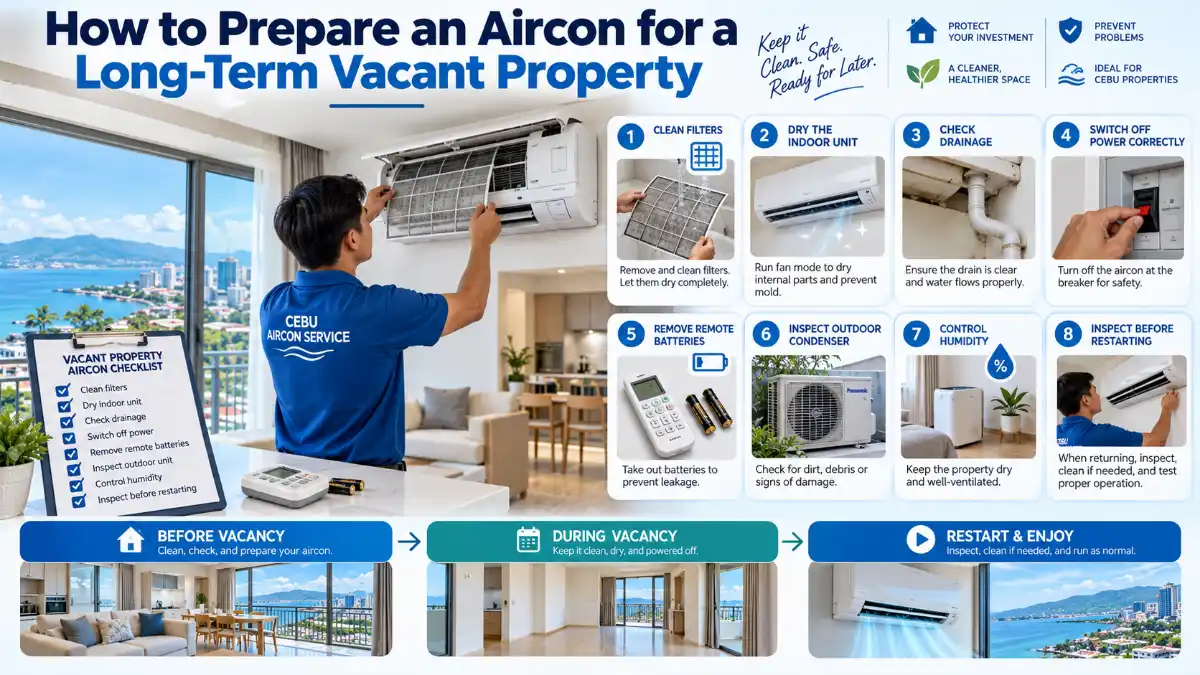
2. Clean the Filters and Indoor Components
Dust and dirt left inside an air conditioner can contribute to airflow restrictions and unpleasant smells when the unit is used again.
Before leaving, remove and clean washable filters according to the manufacturer’s instructions.
Allow them to dry completely before reinstalling.
If the aircon has accumulated substantial internal dirt, professional cleaning may be necessary.
Depending on its condition, this may involve cleaning the evaporator coil, blower, drain tray and accessible drainage components.
Deep or chemical cleaning is not automatically required simply because the aircon will remain unused for several months.
The correct cleaning method should depend on the amount and type of contamination.
3. Dry the Indoor Unit Before Shutdown
Air conditioners collect moisture on their evaporator coils during cooling.
Some moisture may remain inside the unit after operation stops.
Certain manufacturers recommend using fan-only mode or a dedicated internal drying function before an extended shutdown.
This helps remove residual moisture from accessible internal surfaces.
Follow the procedure in your aircon’s operation manual.
Do not confuse dehumidification mode with internal drying. Dry mode generally removes moisture from room air and still produces condensate.
After completing the recommended drying process, switch off the unit normally.
4. Check the Drainage System
Aircon drainage problems can cause water leakage, wall stains and moisture damage.
Before a long-term vacancy, confirm that the drainage system is functioning properly.
Check for:
- Blocked drain hoses
- Loose drainage connections
- Water collecting beneath the indoor unit
- Damp patches on nearby walls
- Damaged drain pipes
- Unusual moisture around concealed pipe routes
If the aircon has a history of water leakage, arrange repairs before leaving.
For condominiums, pay particular attention to concealed drainage lines and building-approved condensate connections.
5. Switch Off the Electrical Supply Correctly
After completing the manufacturer’s shutdown procedure, check whether the aircon’s dedicated circuit breaker should be switched off.
Many residential aircon manuals recommend electrical isolation during prolonged non-use.
However, requirements vary by model and installation.
Before isolating power, confirm that the circuit does not supply another essential system.
Never disconnect fixed wiring or open electrical panels yourself.
For multi-split systems, shared equipment or properties requiring active humidity control, seek professional advice before switching off the supply.
6. Remove the Remote Control Batteries
Remote control batteries can deteriorate or leak during extended storage.
If recommended by the manufacturer, remove disposable batteries before leaving the property.
Keep the remote in a clean, dry location together with the aircon documentation.
This helps prevent battery corrosion and makes the remote easier to locate when the property is occupied again.
7. Protect the Outdoor Condenser
Outdoor aircon units remain exposed to environmental conditions even when switched off.
In Cebu, heavy rainfall, coastal humidity and salt-laden air can contribute to deterioration.
Inspect the outdoor unit for:
- Visible corrosion
- Loose mounting brackets
- Damaged insulation
- Obstructed ventilation
- Leaves and accumulated debris
- Signs of insect or animal activity
- Deteriorated cable protection
Do not cover the condenser with ordinary plastic or an airtight material.
Only use a protective cover if the manufacturer permits it, and remove it before restarting the system.
Outdoor units in elevated or difficult-to-access locations should be inspected by qualified technicians.
8. Control Humidity Inside the Vacant Property
Proper aircon shutdown is only one part of protecting an unoccupied building.
High indoor humidity can encourage mould growth on walls, furniture, curtains and other materials.
Consider using a hygrometer to monitor moisture conditions.
Where practical, maintain indoor relative humidity below 60%, with approximately 30–50% generally preferred for mould prevention.
Possible measures include repairing existing leaks, improving appropriate ventilation and using monitored dehumidification when necessary.
Opening windows may not always help in Cebu because outdoor air can also contain substantial moisture.
Any equipment left running unattended should have suitable electrical protection, drainage and monitoring arrangements.
9. Arrange Periodic Property Inspections
A vacant property can develop problems unrelated to the aircon, including plumbing leaks, roof damage and pest activity.
Regular inspections help identify conditions that may affect the equipment.
A trusted caretaker or property manager can check for:
- Water entering the property
- Damp walls or ceilings
- Unusual odours
- Insect or rodent activity
- Damage around the outdoor condenser
- Unexpected electrical or plumbing problems
Inspection frequency should depend on the property’s condition, location and expected vacancy period.
Following severe weather, arrange an additional inspection when access is safe.
10. How Long Can an Aircon Remain Unused?
An air conditioner can remain unused for several months without necessarily developing a fault.
However, its condition after extended inactivity depends on previous maintenance, indoor humidity, outdoor exposure and equipment age.
An unused aircon does not automatically need additional refrigerant.
A properly sealed refrigeration system should retain its charge. Refrigerant loss generally indicates a leak or another fault requiring professional diagnosis.
There is also no universal requirement to restart every air conditioner once a month. Follow the instructions provided for your particular model.
11. How to Restart an Aircon After Several Months
Before operating an air conditioner that has been unused for an extended period, inspect the equipment.
Step 1: Check for Visible Damage
Look for corrosion, damaged cables, water stains, insect activity or other signs of deterioration.
If there are electrical safety concerns, arrange an inspection before restoring power.
Step 2: Inspect the Filters
Clean or replace filters where necessary.
Make sure all accessible components are correctly fitted.
Step 3: Check the Outdoor Unit
Confirm that the condenser is unobstructed and any protective cover has been removed.
Step 4: Restore the Power Supply
Follow the manufacturer’s instructions. Some systems require a waiting period after power is restored before cooling operation begins.
Step 5: Test the Aircon
Run the unit in cooling mode and observe its performance.
Check for adequate airflow, unusual sounds, unpleasant smells and drainage problems.
If the aircon repeatedly trips its breaker, leaks water or fails to cool, stop operating it and arrange professional servicing.
12. Special Considerations for Cebu Condominiums and Rental Properties
Owners of condominiums and rental properties may need to coordinate maintenance with building administrators or property managers.
Before leaving the property vacant, confirm the building’s requirements concerning:
- Aircon electrical isolation
- Outdoor condenser access
- Shared drainage connections
- Maintenance permits
- Contractor entry
- Periodic vacant-unit inspections
If the property will remain unoccupied until a new tenant arrives, record the aircon’s condition and latest service date.
These records can be useful during the next tenant turnover inspection.
13. Long-Term Vacant Property Aircon Checklist
| Preparation Task | Status |
|---|---|
| Inspect cooling performance and visible condition | ☐ |
| Clean washable air filters | ☐ |
| Arrange professional cleaning if needed | ☐ |
| Complete manufacturer-recommended drying | ☐ |
| Check the drainage system | ☐ |
| Repair existing leaks or faults | ☐ |
| Inspect accessible outdoor equipment | ☐ |
| Shut down the aircon properly | ☐ |
| Isolate power where recommended | ☐ |
| Remove remote batteries if appropriate | ☐ |
| Check indoor humidity | ☐ |
| Arrange periodic property inspections | ☐ |
| Record the last servicing date | ☐ |
| Plan a restart inspection before occupancy | ☐ |
14. When Should You Call an Aircon Technician?
Professional assessment is recommended when the equipment shows signs of deterioration or previous maintenance problems.
Contact a technician if you notice:
- Persistent water leakage
- Significant internal dirt or mould
- Repeated cooling problems
- Abnormal mechanical noise
- Serious outdoor corrosion
- Suspected pest damage
- Damaged refrigerant pipe insulation
- Recurring operational faults
Electrical hazards and fixed wiring concerns should be assessed by appropriately qualified electrical personnel.
A professional inspection can determine whether cleaning, repairs or replacement are necessary.
15. Aircon Maintenance for Vacant Properties in Cebu
Preparing an air conditioner before long-term vacancy helps protect the equipment and makes reopening the property more straightforward.
Whether you own a residential house, condominium or rental unit in Cebu City, Mandaue, Lapu-Lapu, Talisay or nearby areas, proper shutdown and maintenance planning can reduce avoidable problems.
At Cebu Aircon Services, we encourage homeowners, landlords and property managers to address aircon maintenance concerns before leaving a property unattended.
If your air conditioner requires cleaning, inspection or repairs before a prolonged shutdown, arranging professional assistance can help ensure the equipment is properly assessed.
Frequently Asked Questions
Should I turn off the aircon breaker before leaving for several months?
Many manufacturers recommend switching off the dedicated circuit during extended non-use. Check the operation manual and ensure the circuit does not serve essential equipment.
Can an unused aircon develop mould?
Yes. Residual moisture, dust and high humidity can create conditions that support mould growth. Proper cleaning, internal drying and moisture control help reduce the risk.
Should I leave my aircon running in an empty house?
Not automatically. Some properties benefit from monitored humidity control, but continuous cooling can consume electricity and may create risks if faults occur unattended.
Will my aircon lose refrigerant while switched off?
A properly sealed system should not lose refrigerant simply because it is unused. Refrigerant loss normally indicates leakage.
Can I use an aircon after six months without servicing?
Possibly, if the unit remains in good condition. Inspect filters, electrical safety, outdoor equipment and drainage before regular operation.
Should I cover my outdoor aircon unit?
Only use a manufacturer-approved cover where permitted. Remove it before restarting the aircon.
Is chemical cleaning necessary after long-term vacancy?
Not necessarily. Chemical cleaning should only be considered when contamination requires that method and the manufacturer allows it.
How do I prevent moisture damage in a vacant Cebu condo?
Repair leaks, monitor indoor humidity, use appropriate moisture-control measures and arrange periodic inspections.
Final Thoughts
Preparing an air conditioner for long-term vacancy involves cleaning, proper shutdown, moisture management and equipment protection.
Before leaving, resolve existing faults and follow the manufacturer’s instructions. During vacancy, arrange suitable property inspections. When the building is occupied again, check the aircon before returning it to regular use.
Need Aircon Maintenance Before Leaving Your Cebu Property Vacant?
Contact Cebu Aircon Services to discuss professional cleaning, inspection and repair requirements.
Proper preparation can help protect your air-conditioning equipment and reduce avoidable maintenance concerns when you return.