
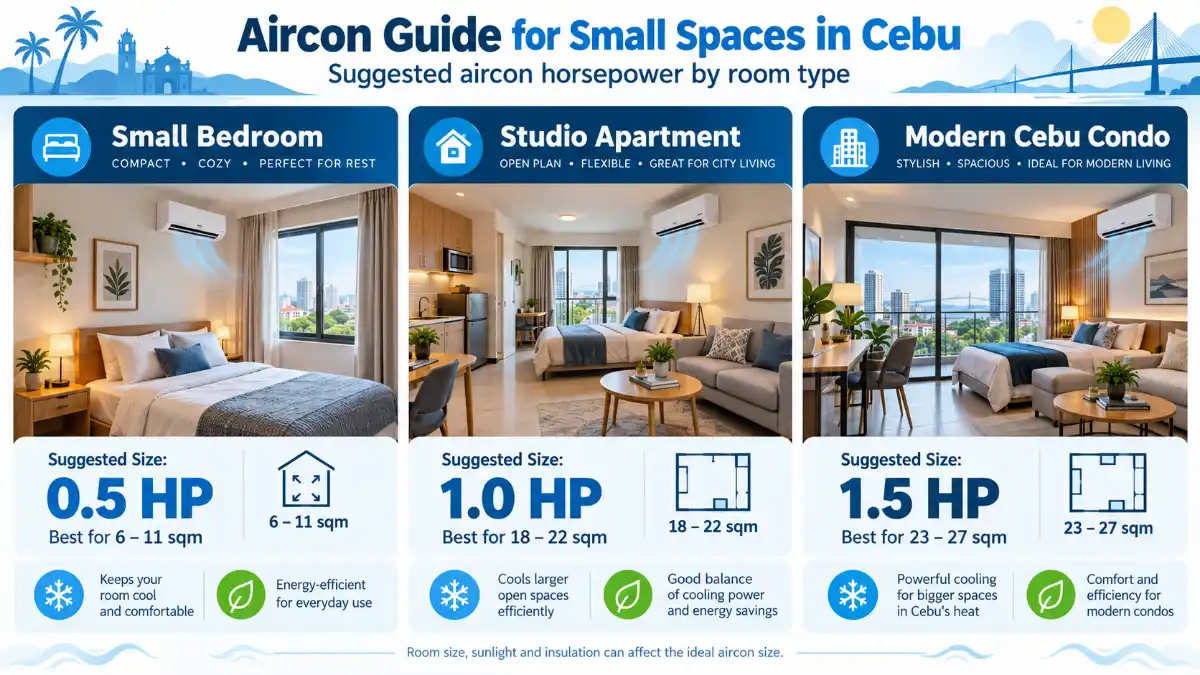
Choosing the right air conditioner for a small bedroom, studio, or condo in Cebu matters. It’s not just about the cheapest unit or a popular brand. Consider layout, window positions, and insulation for effective cooling. This approach helps tailor choices to your daily comfort needs.
Room size, cooling capacity, electricity consumption, and installation requirements affect performance. Additionally, these factors influence operating costs over time. Choosing a model with energy efficiency can reduce bills. Consider the Best Aircon for Small Bedrooms to fit your space and budget.
Cebu’s warm, humid climate makes reliable air conditioning important, especially for residents living in compact spaces where heat can build up throughout the day.
An air-con that is too small may struggle to cool the room, while an oversized unit can waste electricity and provide poor humidity control.
Whether you live in Cebu City, Mandaue, Lapu-Lapu, Talisay or another part of Cebu, this guide explains how to choose an air conditioner that suits your room, budget and daily cooling needs.
1. Measure Your Room Before Buying an Aircon
The first step is determining the actual floor area of the space you want to cool.
Air conditioners are commonly sold in the Philippines using horsepower (HP) ratings, such as 0.5 HP, 0.75 HP, 1.0 HP and 1.5 HP.
These ratings help buyers compare air-con sizes, but the actual cooling capacity also varies between models.
To calculate your room’s floor area, multiply its length by its width.
Room Area (sqm) = Length (m) × Width (m)
For example, a bedroom measuring 3 meters by 4 meters has a floor area of 12 square meters.
Once you know the measurement, you can use it as a starting point when choosing your air-con.
Recommended Aircon HP by Room Size
| Room Size | Suggested Aircon HP | Common Application |
|---|---|---|
| 6–11 sqm | 0.5 HP | Very small bedroom |
| 12–17 sqm | 0.75 HP | Small bedroom or home office |
| 18–22 sqm | 1.0 HP | Larger bedroom or compact studio |
| 23–27 sqm | 1.5 HP | Studio apartment or condo living area |
| 28–40 sqm | 2.0 HP | Larger studio or open-plan space |
These are general guidelines based on Philippine residential air-con sizing recommendations. Final capacity should also account for sunlight, ceiling height, insulation, appliances and the number of occupants.
Why Correct Aircon Sizing Matters
An undersized air conditioner may operate for extended periods without reaching the desired temperature.
Meanwhile, an oversized unit may cool the room too quickly, particularly in non-inverter systems, resulting in frequent compressor cycling and less effective humidity removal.
Choosing the appropriate cooling capacity helps maintain a comfortable temperature without unnecessary electricity consumption.
2. Consider Cebu’s Hot and Humid Climate
Cebu experiences warm temperatures and high humidity throughout much of the year.
However, not every bedroom or condominium receives the same amount of heat.
A room on the upper floor of a building may become warmer than one located on a shaded lower floor.
Similarly, west-facing windows may expose the room to intense afternoon sunlight.
Factors That Increase Cooling Requirements
Before selecting an air conditioner, consider:
- Large windows receiving direct sunlight
- Poor roof or ceiling insulation
- Rooms on the top floor
- High ceilings
- Multiple occupants
- Computers, televisions and other heat-producing appliances
- Open-plan layouts connecting several rooms
- Frequent opening of doors
For example, two bedrooms measuring 12 square meters may require different cooling capacities if one is shaded and the other receives strong afternoon sun.
This is why a professional room assessment can be useful before purchasing a new air-con.
3. Choose Between Inverter and Non-Inverter Aircon
One of the biggest decisions is whether to purchase an inverter or non-inverter air conditioner.
Both types can cool a bedroom or condominium, but they operate differently.
Inverter Air Conditioner
An inverter air-con adjusts its compressor speed according to the room’s cooling requirements.
Instead of repeatedly switching the compressor fully on and off, it can operate at a reduced output once the desired temperature is reached.
Advantages of inverter air-con:
- Generally lower electricity consumption during extended use
- More consistent temperature control
- Often quieter operation
- Suitable for overnight cooling
- Less frequent full compressor cycling
Inverter models usually have a higher initial purchase price, but their energy-saving potential makes them attractive for households using air conditioning every night.
Non-Inverter Air Conditioner
A conventional non-inverter unit typically operates its compressor at a fixed speed and cycles it on and off to maintain the selected temperature.
Advantages of non-inverter air-con:
- Often less expensive to purchase
- Straightforward operation
- Suitable for occasional use
- Widely available in window-type models
However, non-inverter units may consume more electricity during prolonged operation.
Which Is Better for a Small Cebu Bedroom?
For an air-con used approximately six to ten hours daily, an appropriately sized, efficient inverter model is often worth considering.
For occasional cooling, the lower purchase price of a non-inverter unit may be more practical.
The best decision depends on how often you use the air-con, its energy efficiency and your available budget.
4. Window-Type or Split-Type Aircon: Which Should You Choose?
Both window-type and split-type air conditioners are commonly used in Cebu homes, apartments and condominiums.
Your choice should depend on available space, installation restrictions, noise preferences and long-term maintenance.
Window-Type Aircon
Window-type units combine the cooling and compressor components in one housing.
They are commonly installed in a wall opening or designated window-type air-con provision.
Best suited for:
- Small bedrooms
- Rental apartments
- Older condominium buildings
- Rooms with existing air-con openings
- Households with limited installation budgets
Window-type units are often easier to install when a suitable opening already exists.
However, installation still requires proper support, electrical connections and drainage.
Split-Type Aircon
Split-type units consist of an indoor cooling unit and a separate outdoor condenser.
They are commonly preferred in modern condominiums because they offer flexible indoor placement and quieter operation.
Best suited for:
- Modern condo bedrooms
- Studio apartments
- Home offices
- Rooms where quiet operation is important
- Properties designed for split-type installation
Installation typically requires refrigerant piping, an electrical connection, drainage and an approved outdoor unit location.
Quick Comparison
| Feature | Window-Type | Split-Type |
|---|---|---|
| Initial purchase cost | Often lower | Often higher |
| Installation | Simpler with an existing opening | More complex |
| Indoor noise | Often more noticeable | Generally quieter |
| Space requirements | Wall or window provision | Indoor and outdoor unit space |
| Maintenance | Accessible as one main unit | Separate indoor and outdoor components |
| Ideal use | Small rooms and budget installations | Modern bedrooms and condos |
Neither design is automatically more energy-efficient. Compare the actual energy ratings and cooling capacities of individual models.
5. Check the Energy Efficiency Rating
Electricity consumption should be an important consideration when buying an air conditioner for daily use.
In the Philippines, air conditioners covered by the Philippine Energy Labeling Program carry information that helps consumers evaluate energy performance.
When comparing models, check the Cooling Seasonal Performance Factor (CSPF) and the energy-efficiency star rating.
A higher CSPF generally indicates that an air conditioner provides more seasonal cooling for the electricity it consumes.
Two air conditioners with the same advertised horsepower may have different energy-efficiency ratings.
Before purchasing, compare:
- Cooling capacity
- CSPF rating
- Energy label star rating
- Rated electrical input
- Estimated electricity consumption
- Warranty coverage
Choosing an efficient model can help reduce operating costs, especially when the unit is used regularly.
6. Understand How Much Electricity Your Aircon May Use
Understand how much electricity your air-con may use. Additionally, compare cooling wattage and annual running costs for the Best Aircon for Small Bedrooms.
One common concern among Cebu residents is whether installing an air conditioner will significantly increase their monthly electricity bill.
Actual consumption depends on the air-con model, compressor operation, room temperature, thermostat setting, insulation and daily usage.
You can make a basic estimate using this formula:
Estimated Monthly Cost = Average Power Consumption (kW) × Hours Used Daily × 30 × Electricity Rate (₱/kWh)
For example, assume an air conditioner averages 0.6 kW while operating for eight hours every day.
At an illustrative electricity rate of ₱12 per kWh:
0.6 × 8 × 30 × ₱12 = ₱1,728 per month
This is only an example, not a guaranteed electricity bill.
Actual inverter consumption changes as the compressor adjusts its output. Your electricity provider’s applicable residential rate will also affect the total cost.
For a more meaningful comparison, review the energy-label consumption figures for the specific air-con models you are considering.
7. Check Condo Rules Before Installing an Aircon
Condominium residents in Cebu should confirm building installation requirements before purchasing an air-conditioning unit.
Some buildings have designated locations for outdoor condensers, approved drainage connections and restrictions on drilling through structural walls.
Certain properties may also limit which air-con configurations can be installed.
Important Condo Installation Considerations
Before purchasing an air-con, ask the building administration about:
- Approved air-con types and cooling capacities
- Designated outdoor condenser locations
- Permitted pipe routes and wall penetrations
- Drainage requirements
- Electrical capacity and dedicated circuits
- Installation permits or work schedules
- Access requirements for future maintenance
A condominium in Cebu IT Park, Cebu Business Park or Mactan may have different air-conditioning provisions from an older residential building.
Checking these details helps avoid purchasing a unit that cannot be installed in the available space.
8. Consider Noise Levels for Small Bedrooms
In a compact bedroom or studio, the air conditioner may be positioned relatively close to the bed or work area.
Noise levels are therefore important, particularly for light sleepers, students and people working from home.
Look for models that offer:
- Low-noise indoor operation
- Sleep mode
- Adjustable fan speeds
- Quiet compressor technology
- Smooth temperature control
Manufacturers usually publish operating noise levels in decibels (dB).
When comparing products, check the indoor noise ratings at similar fan settings rather than relying only on descriptions such as “silent” or “ultra-quiet”.
Proper installation also helps reduce unwanted vibrations and rattling.
9. Do Not Overlook Installation Costs
The price of the air conditioner is only one part of your overall budget.
Depending on the property and air-con type, installation may require additional materials and labor.
Common installation considerations include:
- Copper refrigerant piping
- Pipe insulation
- Condensate drain piping
- Outdoor condenser brackets
- Electrical wiring and circuit protection
- Wall drilling or mounting
- Additional piping for longer distances
- Removal of an existing unit
For split-type air conditioners, the distance between the indoor and outdoor units may affect installation complexity and cost.
Before buying, request a quotation that clearly identifies what is included.
This helps prevent unexpected expenses after the unit has already been delivered.
10. Think About Future Aircon Maintenance
An air conditioner should be maintained regularly to preserve airflow, cooling performance and reliable operation.
Even an energy-efficient inverter model can experience reduced performance when dust and dirt accumulate on its filters, coils and blower components.
For small bedrooms and condominiums, regular maintenance may include:
- Cleaning washable air filters
- Inspecting the drainage system
- Checking airflow
- Cleaning indoor coils when needed
- Inspecting the outdoor condenser
- Checking for unusual noise or vibration
- Examining visible electrical and mechanical components
Aircon cleaning frequency depends on usage, room conditions, nearby dust and manufacturer recommendations.
Professional servicing can also help identify issues before they become more expensive repairs.
Related reading: What Is the Difference Between Standard Aircon Cleaning, Deep Cleaning, and Chemical Cleaning?
11. Common Mistakes When Buying an Aircon for a Small Room
Choosing an air conditioner without considering the room’s actual requirements can lead to unnecessary expenses and poor performance.
Here are some mistakes worth avoiding.
Buying Based on Price Alone
A low purchase price does not necessarily mean the lowest long-term cost.
Consider electricity efficiency, warranty coverage, servicing requirements and installation expenses.
Choosing More Horsepower Than Necessary
A larger air-con does not automatically provide better comfort.
Oversizing can reduce humidity control and may lead to unnecessary compressor cycling.
Ignoring Sun Exposure
Rooms with large windows or strong afternoon sunlight may require more cooling than their floor area suggests.
Overlooking Condo Restrictions
Some condominiums have specific requirements concerning condenser placement, drainage and installation work.
Forgetting About Maintenance Access
An indoor unit installed too close to the ceiling or without sufficient service clearance may be more difficult to clean and maintain.
Hiring an Unqualified Installer
Incorrect installation can contribute to water leakage, vibration, inefficient operation and equipment damage.
Proper installation is just as important as choosing the correct air-con.
12. What Aircon Is Best for Different Small Spaces in Cebu?
The following examples can help you narrow down your choices.
Small Bedroom: 8–10 sqm
A 0.5 HP air conditioner may be sufficient for a small, reasonably insulated bedroom with limited sunlight.
A compact window-type unit may work well where an appropriate installation opening already exists.
Standard Bedroom: 12–15 sqm
A 0.75 HP air conditioner is a reasonable starting point.
If the room receives strong sunlight, has a high ceiling or contains multiple heat-producing appliances, the cooling capacity should be reassessed.
Larger Bedroom or Studio: 18–22 sqm
A 1.0 HP model may suit this floor area under typical conditions.
An inverter split-type unit can be attractive where quiet operation and regular overnight use are priorities.
Open-Plan Condo: 23–27 sqm
A 1.5 HP air conditioner is a useful starting point for a studio where the bedroom, sitting area and small kitchen share the same space.
However, open layouts, cooking heat and extensive glazing may increase the actual cooling requirement.
An on-site assessment is particularly helpful for these properties.
13. When Should You Consult an Aircon Technician?
Although room-size charts are useful, some installations require a more detailed assessment.
Professional advice is particularly valuable when:
- Your room has unusually high ceilings.
- The property receives intense afternoon sunlight.
- You have large floor-to-ceiling windows.
- The unit must cool multiple connected spaces.
- The outdoor condenser location is restricted.
- You are replacing an incorrectly sized air-con.
- The existing electrical installation needs checking.
- You are unsure whether to choose a window-type or split-type system.
An experienced technician can help assess the room and identify practical installation requirements before work begins.
14. Aircon Installation and Maintenance in Cebu
Selecting the right air conditioner is the first step towards making your bedroom, apartment or condominium more comfortable.
Correct sizing, proper installation and regular servicing all contribute to dependable cooling performance.
At Cebu Aircon Services, our goal is to help Cebu residents make informed decisions about their air-conditioning needs.
Whether you are planning a new air-con installation, replacing an older unit or arranging routine maintenance, choosing the appropriate service can help protect your equipment and avoid unnecessary expenses.
If you live in Cebu City, Mandaue, Lapu-Lapu or nearby communities, consider arranging an air-con assessment before making your final purchase.
Frequently Asked Questions
What is the best air-con HP for a small bedroom in Cebu?
For a bedroom measuring approximately 6–11 square meters, 0.5 HP may be suitable under typical conditions. A 12–17 sqm room may require 0.75 HP. Sunlight, insulation and occupancy should also be considered.
Is a 1.0 HP air-con too big for a small bedroom?
It can be oversized for a very small, well-insulated bedroom. However, higher cooling capacity may be justified where the room receives strong sunlight or experiences additional heat loads. Check the actual capacity and room requirements before deciding.
Is inverter air-con worth buying for a condo?
An inverter air-con is often a practical investment when used for several hours each day. Its ability to adjust compressor output can help reduce energy consumption compared with a conventional fixed-speed unit.
Which is better for a studio apartment: window-type or split-type?
A split-type inverter may offer quieter indoor operation and flexible installation. A window-type unit may be more affordable and suitable where the building already provides an approved opening. The best option depends on the property.
How can I reduce my air-con electricity bill in Cebu?
Choose a properly sized, energy-efficient unit, clean its filters, reduce direct sunlight and maintain a reasonable thermostat setting. Keeping doors and windows closed while cooling also helps prevent unnecessary heat gain.
Can I install a split-type air-con in any condominium?
Not always. Condo management may regulate condenser placement, pipe routing, drainage, electrical connections and drilling. Confirm the building’s requirements before purchasing or installing a unit.
How often should I clean my bedroom air-con?
Follow the manufacturer’s maintenance instructions and adjust the schedule according to usage and dust buildup. Washable filters may need frequent attention, while internal cleaning should be performed when the unit’s condition requires it.
Final Thoughts
Choosing an air conditioner for a small bedroom, studio or condominium in Cebu begins with understanding the space.
Measure the room, consider sunlight and occupancy, compare the actual cooling capacity and energy efficiency of available models, and verify installation requirements.
For households that use air conditioning regularly, a properly sized inverter unit can offer a good balance of comfort and operating efficiency.
Most importantly, avoid choosing an air-con based on horsepower or purchase price alone.
Need help choosing or installing an air-con in Cebu?
Contact Cebu Aircon Services to discuss your room requirements, installation considerations and maintenance needs. A proper assessment can help you select an air conditioner suited to your space and everyday use.