
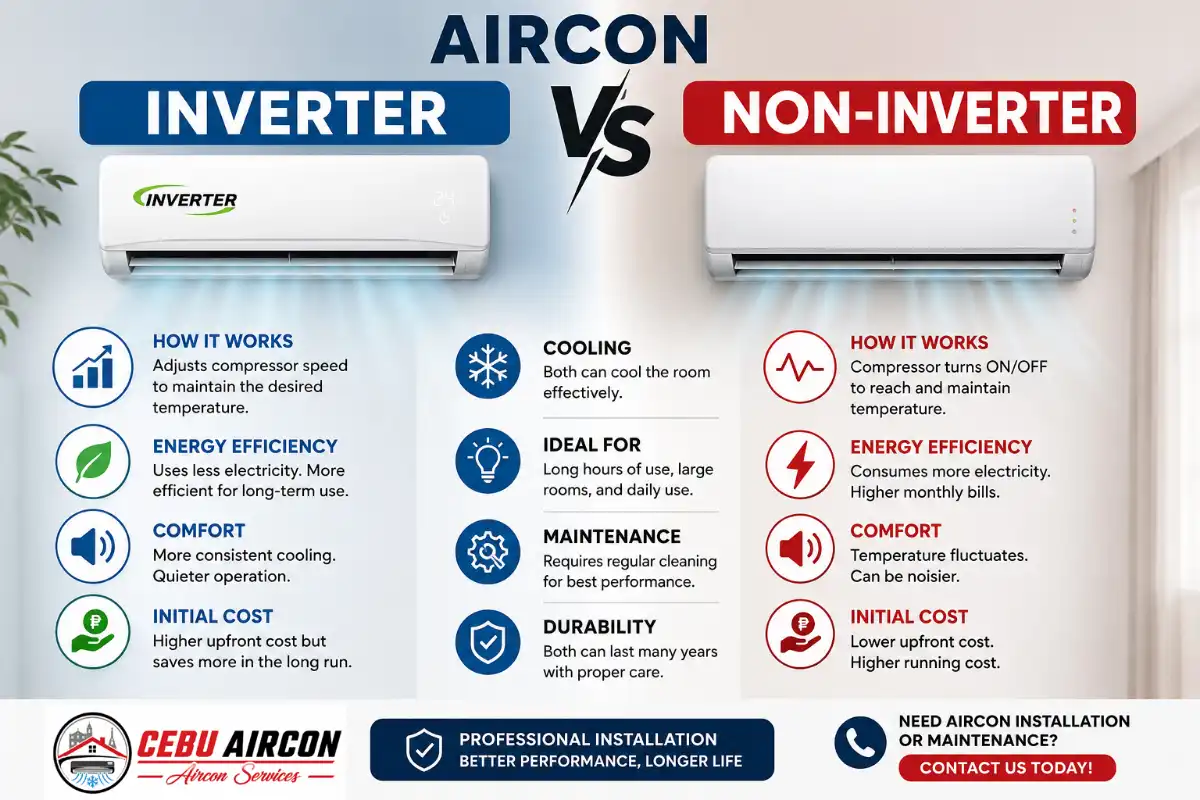
Choosing between an inverter vs non-inverter aircon can affect your electricity consumption, indoor comfort and long-term maintenance costs. This decision is especially important in Metro Cebu, where air conditioners often operate for several hours because of warm temperatures and humid conditions.
Both systems can cool bedrooms, offices, condominiums, shops and commercial spaces. However, they operate differently. The better option depends on how often you use the aircon, the size of the room, your budget and the condition of your property.
This guide compares inverter and non-inverter aircons to help homeowners and businesses across Cebu City, Mandaue City, Lapu-Lapu City and nearby areas make an informed choice.
What Is an Inverter Aircon?
An inverter aircon uses a variable-speed compressor. Instead of repeatedly switching the compressor fully on and off, the system adjusts its operating speed according to the cooling needed inside the room.
When you first switch it on, the compressor may operate at a higher level to reach the selected temperature. Once the room becomes cool, it can reduce its speed and maintain a more consistent temperature.
This controlled operation can reduce sudden changes in power demand and prevent the aircon from repeatedly restarting at full capacity.
What Is a Non-Inverter Aircon?
A non-inverter aircon normally uses a fixed-speed compressor. It operates at full capacity until the room reaches the selected temperature. The compressor then switches off and restarts when the room becomes warm again.
This on-and-off cycle is simple and effective, but it can create noticeable temperature changes. It may also use more electricity when the unit runs for long periods because the compressor repeatedly restarts.
Non-inverter models usually have a lower purchase price, making them attractive to buyers with a limited initial budget.
Which Aircon Uses Less Electricity?
An inverter aircon is generally more energy-efficient when used regularly and for extended periods. After reaching the desired temperature, it can slow down rather than repeatedly stopping and restarting.
The actual electricity savings will depend on several factors, including:
- Aircon horsepower and energy-efficiency rating
- Daily operating hours
- Room size and ceiling height
- Number of occupants
- Sunlight entering the room
- Condition of doors and windows
- Temperature setting
- Filter and coil cleanliness
An inverter model will not automatically produce low electricity bills if it is undersized, poorly installed or used with doors and windows left open.
For bedrooms, offices and commercial spaces where the aircon runs for many hours, an inverter system is often the more practical long-term option.
Which One Cools the Room Faster?
Both types can cool effectively when the horsepower matches the room’s cooling requirements. Some inverter units can operate at a higher initial speed, helping them bring the room temperature down quickly.
However, choosing the correct capacity is more important than simply choosing inverter technology. A small aircon installed in a large room may struggle to cool the space, regardless of whether it is an inverter model.
Before buying, ask a qualified technician to assess the room. Floor area is important, but sunlight, insulation, appliances, ceiling height and occupancy should also be considered.
Inverter Aircon Advantages
Lower Electricity Consumption
An inverter aircon can reduce power use when operated for several hours because the compressor adjusts its speed according to demand.
More Consistent Temperature
The system makes smaller cooling adjustments, which can prevent the room from becoming too cold and then too warm.
Quieter Operation
Because the compressor does not always operate at full capacity, many inverter models run more quietly after reaching the selected temperature.
Suitable for Long Daily Use
Inverter units are often ideal for bedrooms, home offices, condominiums, clinics and business premises that require reliable cooling throughout the day or night.
Better Long-Term Value
Although the purchase price may be higher, potential electricity savings can make an inverter aircon more economical over time.
Inverter Aircon Disadvantages
The main disadvantage is the higher upfront cost. Inverter units also use more advanced electronic components, including control boards and sensors. Repairs may cost more if these specialised parts fail.
Proper installation is essential. Incorrect wiring, poor refrigerant-line preparation or unstable voltage may affect performance. Choose an experienced technician familiar with the aircon brand and model.
Non-Inverter Aircon Advantages
Lower Purchase Price
Non-inverter models are usually more affordable, making them suitable for properties with a limited equipment budget.
Simpler Operating System
Their fixed-speed design is generally straightforward. Depending on the brand and problem, some repairs may be easier or less expensive.
Practical for Occasional Use
A non-inverter unit may be reasonable for a guest room, small storage office or space where cooling is required only for short periods.
Non-Inverter Aircon Disadvantages
A non-inverter compressor repeatedly switches on and off to maintain the temperature. This cycling may increase electricity use during long operating periods.
The room temperature may also fluctuate more noticeably. Some users may hear the compressor start and stop, particularly in quiet bedrooms or small offices.
Which Aircon Is Better for Metro Cebu Homes?
An inverter aircon is usually the better choice for households that use cooling every day, especially overnight or for several continuous hours. It may provide steadier cooling, quieter operation and lower long-term electricity consumption.
A non-inverter unit may still be suitable when:
- The room is used occasionally.
- The aircon operates for short periods.
- The initial budget is limited.
- The property will not be occupied for many years.
- A simple replacement unit is needed.
Consider total ownership cost rather than purchase price alone. Include installation, electricity use, regular cleaning, repairs and expected operating hours.
Aircon Options for Metro Cebu Businesses
Offices, restaurants, clinics, salons, shops and rental properties often require longer cooling hours. In these situations, an inverter aircon may provide better long-term value.
Businesses should also consider the number of people in the room, heat produced by equipment, opening and closing of doors and exposure to afternoon sunlight.
For larger commercial areas, several correctly sized units may perform better than one oversized aircon. A site inspection can determine the most practical layout.
Installation and Maintenance Matter
Even a high-quality inverter aircon may perform poorly when incorrectly installed. The indoor unit should provide balanced airflow, while the outdoor condenser needs adequate ventilation and safe access for servicing.
Copper piping, drainage, electrical connections and refrigerant preparation should follow the manufacturer’s requirements.
Regular aircon cleaning is equally important. Dirty filters, coils and blower components can restrict airflow and force the system to work harder. Properties near busy roads, construction areas or coastal locations may require more frequent maintenance.
Professional aircon services are available across Cebu City, Mandaue, Lapu-Lapu, Talisay, Consolacion, Minglanilla and other parts of Metro Cebu.
Frequently Asked Questions
Is an inverter aircon always cheaper to operate?
It is generally more efficient during long and regular use. Actual savings depend on room conditions, capacity, usage habits, maintenance and installation quality.
Is a non-inverter aircon still worth buying?
Yes. It may be suitable for rooms used only occasionally or for buyers who prioritise a lower initial cost.
How many hours should an inverter aircon run?
An inverter unit can operate for extended periods because it adjusts compressor speed. However, the unit must be correctly sized and regularly maintained.
Does an inverter aircon require special maintenance?
Standard cleaning and inspection remain necessary. Because it has advanced electronics, diagnosis and repair should be handled by a technician familiar with inverter systems.
Get Professional Aircon Advice in Metro Cebu
For most homes and businesses with regular daily cooling needs, an inverter aircon offers better energy efficiency, consistent temperature and quieter operation. A non-inverter model can still be practical for occasional use and lower upfront costs.
Before buying, request a room assessment and compare unit capacity, energy rating, warranty, installation requirements and available after-sales support.
For professional aircon installation, cleaning and maintenance in Metro Cebu, contact Cebu Aircon Services. Provide your room size, preferred brand, location and estimated daily usage so the team can recommend a suitable aircon for your property.